
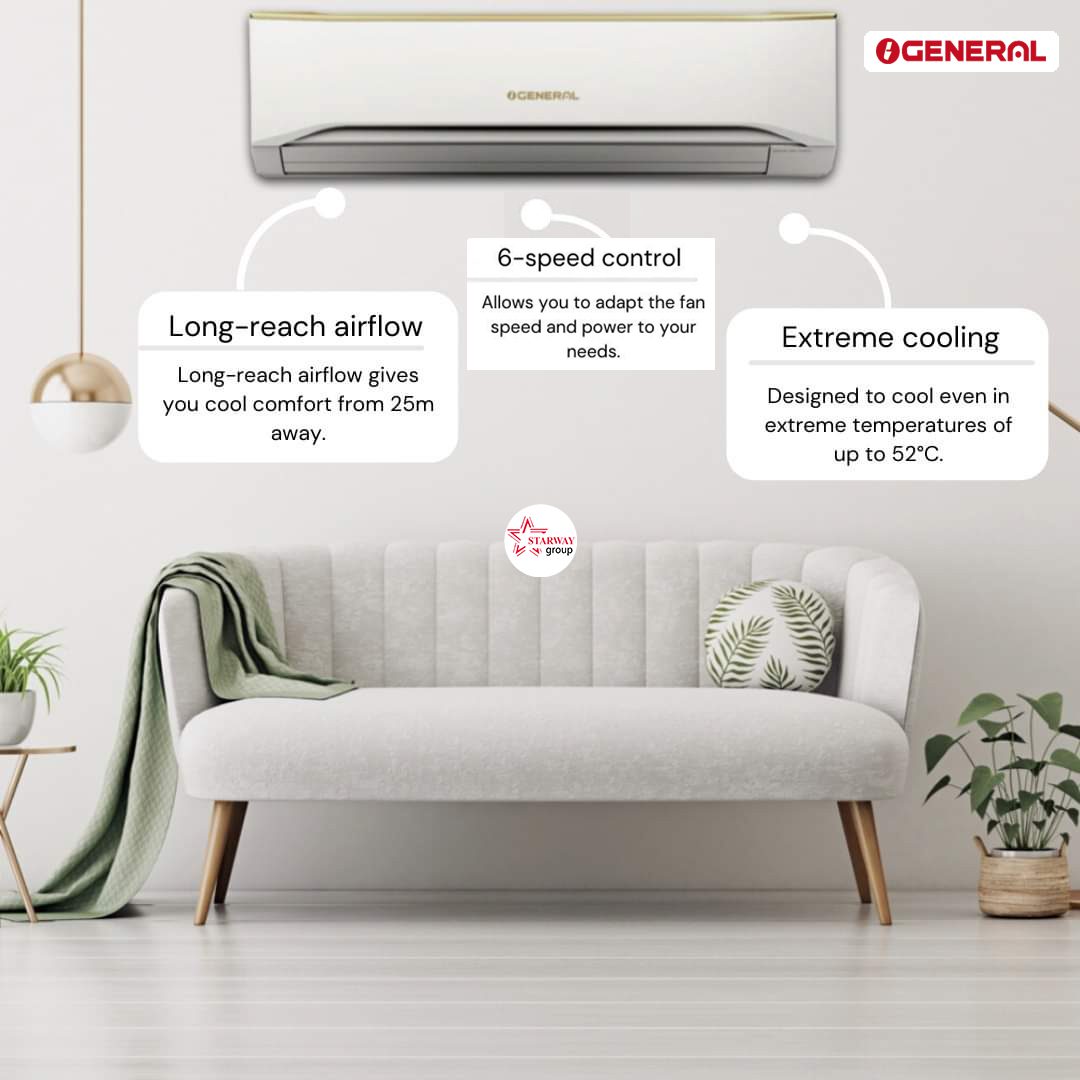
Advanced High-Wall Inverter Split Air Conditioning Systems & Cooling Technology for Modern Interiors
Achieving rapid thermal comfort, whisper-quiet operation, and precise temperature regulation across residential apartments, private bedrooms, and commercial offices requires high-performance split ac technology. Separating the noisy compressor condenser module outdoors from the sleek indoor evaporator blower unit, these systems deliver powerful cooling while maintaining quiet indoor acoustics and elegant wall integration.
Operating in severe high-ambient environments where summer temperatures soar past 50°C (122°F) demands robust thermodynamic machinery. Premium high-wall split configurations combine heavy-duty tropical T3 twin rotary compressors with advanced DC inverter modulation, ensuring uninterrupted cooling performance, rapid temperature pull-down, and optimized energy efficiency.
Whether you are an MEP consultant specifying equipment for multi-story residential towers, a real estate developer outfitting modern apartments, or a homeowner upgrading private living spaces, understanding split engineering standards guarantees optimal indoor air quality and power savings. To examine verified product specifications, technical engineering catalogs, and tailored procurement packages, visit O General AC Dealer.
Why Choose High-Wall Split Systems for Modern Rooms?
Compared to traditional window air conditioners that occupy window frames and generate loud operational humming, modern split ac units mount cleanly onto upper wall surfaces. The heavy compressor and motor sit safely outdoors on exterior brackets or balconies, isolating all operational vibration and mechanical sound from the indoor environment.
Furthermore, contemporary split units incorporate intelligent airflow louvers that adjust automatically in vertical and horizontal directions. This omnidirectional air sweep projects conditioned air smoothly across distances of up to 20 meters, eliminating localized hot spots and ensuring uniform comfort throughout the room.
Silent Indoor Operation
Compressor noise is isolated outdoors, allowing indoor blowers to operate at whisper-quiet decibel levels ideal for bedrooms.
High-Velocity Air Throw
Advanced cross-flow fan blowers and louver designs project cool air rapidly across the entire room space.
Inverter Efficiency
Variable-speed inverter compressors adjust power dynamically, cutting electricity consumption by up to 40%.
Understanding DC Inverter & Tropical T3 Performance
Traditional fixed-speed air conditioners operate on a binary cycle—running at 100% capacity when active and shutting off completely when the target temperature is reached. This constant start-stop cycle creates massive electrical inrush current spikes and noticeable indoor temperature fluctuations. Modern split ac units utilize advanced DC Inverter technology to regulate motor frequencies smoothly.
In high-ambient desert regions, units must also feature tropical T3 compressors built with high-coercivity neodymium magnets. These specialized compressors sustain 100% cooling output even when outdoor ambient temperatures climb past 55°C (131°F), preventing thermal cutouts and ensuring continuous indoor comfort.
All-DC Inverter Twin Rotary Compressors
Heavy-duty mechanical balancing reduces vibration and friction, enabling continuous high-efficiency operation in severe summer heat.
V-PAM & Vector Inverter Control
Advanced electronic logic converts electrical current into smooth sinusoidal waves, maximizing motor torque and energy efficiency.
Lambda-Type High-Density Heat Exchangers
Multi-angle coil architecture maximizes thermal transfer surface area within a compact indoor and outdoor chassis footprint.
Blue Fin Hydrophilic Condenser Coating
Special anti-corrosion coating repels moisture and prevents salt encrustation, tripling condenser lifespan in coastal zones.
Summary Table of High-Wall Split Capacities
Review the primary technical parameters of high-wall split cooling systems available for residential and commercial deployment:
| Split Model Category | Cooling Capacity (BTU) | Recommended Room Application | Primary Engineering Benefit |
|---|---|---|---|
| 1.0 Ton Inverter Split | 12,000 BTU | Small Bedrooms, Study Rooms, Home Offices | Compact indoor footprint with ultra-low operating noise. |
| 1.5 Ton Inverter Split | 18,000 BTU | Master Bedrooms, Studio Apartments | Balanced thermal output with rapid temperature pull-down. |
| 2.0 Ton Inverter Split | 24,000 BTU | Large Living Rooms, Open Plan Offices, Majlis | High-velocity air throw reaching up to 15–20 meters. |
| 2.5 to 3.0 Ton Split | 30,000 to 36,000 BTU | Retail Shops, Large Halls, Commercial Spaces | Heavy-duty T3 compressor built for extreme ambient heat. |
Step-by-Step Professional Split Installation Standard
Deploying a split ac unit requires precise craftsmanship to prevent refrigerant leaks, condensate overflows, and electrical inefficiencies. Certified technical teams adhere to a strict multi-phase installation protocol:
Strategic Wall Mounting & Leveling
The indoor evaporator mounting plate is securely anchored and leveled on a solid wall to ensure smooth condensate drainage toward the exit piping.
Seamless Copper Tubing & Armaflex Insulation
High-purity copper lines connecting indoor and outdoor units are wrapped in thick Armaflex insulation to prevent energy loss and condensation.
Outdoor Condenser Vibration Isolation
The outdoor condensing unit is bolted securely onto heavy-duty rubber vibration pads or wall brackets to eliminate structural resonance.
Nitrogen Pressure Testing & Deep Vacuum
The sealed copper circuit undergoes a 24-hour nitrogen test at 500 PSI, followed by vacuum evacuation below 500 microns to extract internal moisture.
Refrigerant Charging & Commissioning
Refrigerant pressures are finalized, electrical amperages are verified, and system performance is tested before client handover.
Frequently Asked Questions
What is the main difference between a split AC and a window AC unit?
A window AC is a single boxed unit mounted directly into an exterior wall opening, keeping the compressor indoors where it generates noise. A split AC separates the noisy compressor outdoors from the quiet indoor blower, offering superior acoustic comfort and aesthetic appeal.
How do inverter split ACs save on monthly electricity bills?
Inverter compressors adjust their motor speeds dynamically to match real-time room thermal loads rather than repeatedly turning fully on and off, eliminating electrical current surges and reducing power consumption by up to 40%.
How do I choose the correct tonnage for my room size?
As a general guideline, a 1.0-ton unit covers up to 150 sq. ft., a 1.5-ton unit covers up to 250 sq. ft., and a 2.0-ton unit covers up to 350 sq. ft., though factors like ceiling height and solar exposure also apply.
How often should split AC filters be cleaned?
In dusty high-ambient environments, washable indoor mesh filters should be rinsed every 2 to 3 weeks to maintain unrestricted airflow and optimal cooling efficiency.
Where can I view verified product specifications and technical catalogs?
Project engineers, contractors, and property owners can explore authentic product catalogs and technical datasheets by visiting O General AC Dealer.
Conclusion: The Ultimate Choice for Room Climate Control
Investing in premium high-wall split ac infrastructure ensures uncompromised indoor comfort, whisper-quiet acoustic performance, and long-term energy efficiency across residential and commercial rooms. By combining advanced DC inverter modulation with tropical T3 compressor resilience, modern split systems establish the benchmark for reliable room climate management.
Whether outfitting an apartment bedroom, an executive office, or a retail boutique, partnering with certified specialists guarantees flawless execution from equipment selection to final commissioning.
To explore authentic product catalogs, access professional BTU sizing support, and secure direct project supply, visit O General AC Dealer.
Leave a Reply